

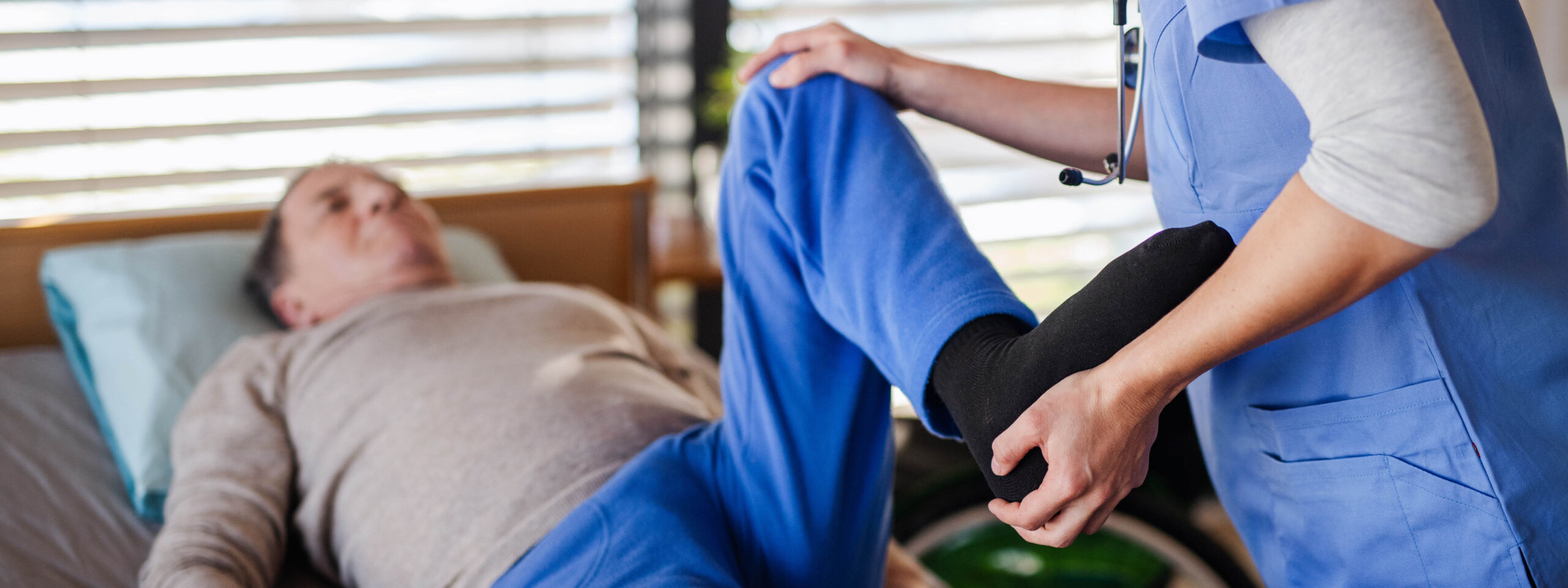
Hip fracture in old age – causes, treatment & rehab
Why is a hip fracture so dangerous in old age?
As we age, bone density decreases and balance becomes less stable – and a fall can have serious consequences. A particularly common one: the hip fracture (fracture of the femoral neck). It can lead to long-term restrictions in mobility and severely impairs the independence of those affected.
Typical causes and risk factors
The cause is usually a fall – often in one’s own home. Risk factors include:
– Osteoporosis
– Muscle weakness and unsteady gait
– Side effects of medication
– Trip hazards such as rug edges or poor lighting
Signs and symptoms
A hip fracture often shows itself through:
– Severe pain in the hip or groin area
– Restricted movement in the affected leg
– Visible misalignment: the leg looks shorter or is turned outwards
– Bruising or swelling on the hip
How is the diagnosis made?
The fracture can usually be clearly identified by X-ray. In unclear cases, an MRI helps, also to detect accompanying injuries or circulatory problems.
Treatment options at a glance
Treatment depends on the severity of the fracture and the general condition of the person concerned:
– Conservative: only for stable fractures – with immobilisation and pain management.
– Surgical:
– Osteosynthesis: the fracture is fixed with screws or plates.
– Hip replacement: joint replacement for more complex injuries or poor bone quality.
Advantages and disadvantages of the surgical options
– Osteosynthesis:
Advantages: less invasive procedure, the natural hip joint is preserved
Disadvantages: as with any surgical procedure, complications such as infections, delayed healing or joint stiffness can occur with osteosynthesis, and further operations may also be necessary
– Hip replacement:
Advantages: faster mobilisation, often less pain, usually faster healing than with osteosynthesis
Disadvantages: longer operation, risk of later loosening
Rehabilitation after surgery
Ideally, rehab begins as early as the day after the operation. It includes:
– Early mobilisation with physiotherapy
– Strengthening the muscles
– Fall prevention
– Pain therapy
– Adapting the living environment
Long-term consequences and challenges
A hip fracture can lead to persistent problems, especially in older people:
– Chronic pain
– Loss of independence
– Risk of thrombosis or pressure ulcers
– Psychological consequences such as fear of falling again
How to prevent a fracture
– Remove trip hazards in the home (e.g. rug edges, poor lighting)
– Install grab bars in the bathroom and hallway
– Training for balance and muscle strength
– A balanced diet with calcium and vitamin D
– Medication review with your GP
FAQ – frequently asked questions
- How long does healing take?
→ Usually 6–12 weeks; rehab can take longer. - Is surgery always necessary?
→ In most cases, yes – especially for unstable fractures. - How can it be prevented?
→ With exercise, a safe home, a good diet and regular check-ups. - Which aids help in everyday life?
→ Rollators, care beds, raised toilet seats, emergency call systems. - What is osteosynthesis?
→ A surgical method of fixing the fracture with screws or plates. - When is a hip replacement an option?
→ For severe fractures or poor bone quality.
Conclusion: early help, good rehab, a safe environment
A hip fracture is no small matter – but with prompt treatment, targeted rehab and adjustments in everyday life, the road back to mobility is achievable. Prevention remains the key to greater safety in old age.
More articles

MiGeL list: what is Switzerland’s List of Aids and Appliances?
READ MORE >
13th AHV pension: what changes for pensioners in Switzerland from 2026
READ MORE >